

Basic tax preparation handles filing your returns, but professional tax accounting services offer year-round strategic guidance, compliance management, and proactive planning. You need tax accounting services when your business has grown beyond simple income and expenses, when you face complex transactions, or when you want to minimize tax liability through strategic decision-making rather than just filling out forms in April.
The difference between the two approaches can mean thousands of dollars in missed deductions, compliance penalties, or lost opportunities. Understanding when to make the transition protects your business from costly mistakes and positions you for sustainable growth.
Understanding the Fundamental Difference Between Tax Prep and Tax Accounting
Tax preparation is a seasonal service focused on completing and filing required returns. A tax preparer collects your financial documents, enters the information into software, and submits your returns to the IRS and state agencies. The relationship typically begins in January and ends when you receive your filed return.
Tax accounting encompasses preparation but extends far beyond it. A tax accountant works with you throughout the year to structure transactions, forecast tax liability, implement strategies to reduce what you owe, and ensure compliance with changing regulations. They analyze your business decisions through a tax lens before you commit, helping you choose the most advantageous path forward.
The difference becomes clear when you face a major business decision. A tax preparer records what already happened. A tax accountant helps you decide what should happen next.

Your Revenue Has Crossed the Six-Figure Threshold
Once your business consistently generates over $100,000 in annual revenue, tax complexity increases dramatically. You face different deduction rules, potential alternative minimum tax considerations, and heightened IRS scrutiny. The cost of professional tax and accounting services becomes a fraction of what you save through proper planning.
At this revenue level, quarterly estimated tax payments become mandatory, and miscalculating them triggers penalties. A tax accountant monitors your cash flow and profitability throughout the year, adjusting your estimated payments to match your actual performance rather than relying on prior-year figures that may no longer reflect your current situation.
You also gain access to more sophisticated deduction strategies. Section 179 expensing, bonus depreciation, and cost segregation studies require expertise to implement correctly. These tools can defer tens of thousands in tax liability when structured properly, but they create audit risk when applied incorrectly.
You Are Managing Multiple Business Entities or Locations
Operating more than one LLC, corporation, or partnership multiplies your compliance obligations and creates opportunities for strategic tax planning. Each entity files its own return, maintains separate books, and faces distinct deadlines. Coordinating these moving parts requires professional oversight to avoid late filing penalties and ensure proper information flows between related entities.
Multi-entity structures also enable income shifting strategies that reduce overall tax burden. Your accountant can analyze whether to retain income in one entity, distribute it to another, or pay it as compensation based on current tax rates and your personal financial situation. These decisions require ongoing analysis, not annual review.
If you operate in Florida but have customers or operations in other states, you face nexus questions that determine where you owe income tax, sales tax, and payroll tax. Getting these determinations wrong triggers back taxes, interest, and penalties that far exceed the cost of proper accounting guidance.
You Have Added Employees to Your Payroll in Florida
Hiring employees transforms your tax obligations overnight. You become responsible for withholding federal income tax, Social Security, and Medicare, plus Florida-specific requirements. Payroll tax mistakes rank among the most expensive errors a business can make because the IRS treats withheld employee funds as trust money you hold temporarily.
Professional bookkeeping and accounting services ensure accurate calculation, timely deposits, and proper quarterly and annual reporting. Form 941 quarterly returns, annual Form 940 for unemployment tax, W-2 distribution, and state unemployment reporting all carry strict deadlines with severe penalties for late or incorrect filing.
Beyond compliance, an accountant helps you structure compensation to balance cash flow, tax efficiency, and employee satisfaction. Deciding between salaries, bonuses, benefits, and retirement contributions involves complex trade-offs that impact both your business taxes and your employees’ situations.

Your Books No Longer Reconcile Cleanly Each Month
When you cannot quickly explain every line item in your profit and loss statement or balance sheet, you have lost control of your financial data. Unreconciled accounts, mystery transactions, and balance sheet accounts that never clear signal that your bookkeeping has outgrown your current approach.
Professional tax accounting includes proper bookkeeping as a foundation. Your accountant establishes chart of accounts aligned with tax reporting requirements, implements controls to catch errors, and reconciles accounts monthly to ensure accuracy. This discipline prevents the year-end scramble to figure out what actually happened during the past 12 months.
Clean books also protect you during an audit. The IRS expects organized records that support every deduction you claim. When your books reconcile to bank statements and you can produce receipts on demand, audits conclude quickly with minimal adjustments. Disorganized records invite deeper scrutiny and often result in disallowed deductions based on lack of substantiation.
You Face Inventory Management or Cost of Goods Sold Calculations
Businesses that manufacture products, purchase inventory for resale, or hold significant raw materials must calculate cost of goods sold accurately. This calculation directly impacts taxable income, yet it involves complex decisions about inventory valuation methods, capitalization rules, and period-end adjustments.
Your accountant helps you choose between FIFO, LIFO, or average cost methods based on your industry and business cycle. They ensure you capitalize all required costs into inventory rather than expensing them immediately, which would understate income and invite IRS adjustment. They also identify obsolete or damaged inventory that qualifies for write-downs, reducing your tax liability legally.
The Tax Cuts and Jobs Act created new opportunities for small businesses with inventory through changes to accounting method rules. Qualifying businesses can now use cash-basis accounting even with inventory, simplifying bookkeeping dramatically. Determining eligibility and implementing the change requires professional guidance, but the administrative savings can be substantial.
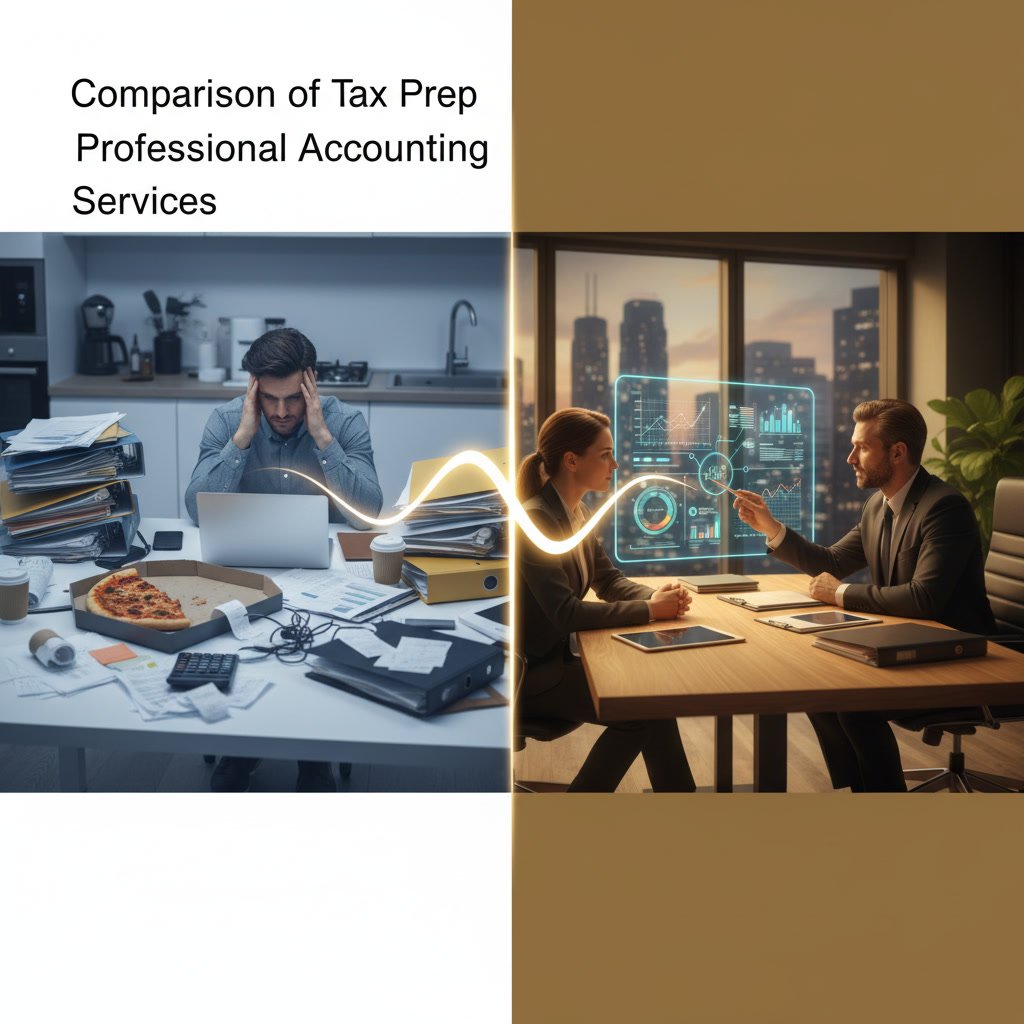
Comparison of Tax Prep Versus Professional Accounting Services
Tax preparation alone focuses on historical compliance. An accountant answers what you owed last year based on what happened. The service typically costs $500 to $2,000 depending on return complexity, covers just the filing season, and provides no strategic input on business decisions.
Professional tax accounting delivers ongoing advisory services throughout the year. Your accountant models tax impact before you make major purchases, hire employees, or change business structure. You receive quarterly reviews of financial performance and tax position, estimated payment calculations, and year-end planning to minimize current-year liability. The service typically runs $3,000 to $10,000 annually depending on business complexity.
The return on investment comes from avoided penalties, optimized deductions, and strategic decisions that reduce tax liability by amounts far exceeding the professional fees. One properly structured equipment purchase using Section 179 expensing can save $10,000 or more in taxes. One avoided payroll tax penalty can justify years of professional fees.
Businesses that maintain professional accounting relationships also close faster when seeking funding. Lenders and investors require detailed financial statements prepared according to accounting standards. Having these ready throughout the year, rather than scrambling to create them when opportunity arises, accelerates access to business funding options.
You Are Planning Significant Business Investments or Changes
Purchasing real estate, buying equipment over $50,000, acquiring another business, or bringing on partners all carry major tax implications that vary based on timing and structure. Making these moves without tax input can cost you tens of thousands in unnecessary liability or lock you into unfavorable long-term positions.
An accountant models different scenarios before you commit. Should you lease or buy? Should your business entity own the real estate or should you own it personally and lease to your business? Should you structure an acquisition as an asset purchase or stock purchase? Each choice creates different tax outcomes for the current year and future years.
Year-end planning becomes particularly valuable. If you know in October that you will have a profitable year, your accountant can recommend accelerating deductible expenses or equipment purchases into the current year to reduce the tax bill. If you expect lower income this year than next, you might defer income to take advantage of lower rates. These strategies require advance planning and cannot be implemented retroactively.
You Have Received Notices from the IRS or State Tax Agencies
Tax notices range from simple information requests to significant proposed adjustments. Basic tax preparers rarely handle correspondence or represent clients in disputes. When you receive a notice, you are on your own to respond, and the language in these notices often confuses business owners unfamiliar with tax terminology.
Professional accountants with representation rights can respond on your behalf, explain proposed changes in plain language, and negotiate with the agency to resolve disputes. They understand what documentation satisfies examiner requests and how to present your position persuasively within agency procedures.
More importantly, ongoing accounting relationships often prevent notices from arriving in the first place. Your accountant ensures timely filing, accurate reporting, and proper information return matching. They catch discrepancies before they become problems and maintain organized records that support every position taken on your returns. For more complex matters, scheduling general consultations can help you address specific concerns before they escalate.
Your Business Model Includes Complex Revenue Recognition
Service businesses with long-term contracts, software companies with subscription models, and construction firms with multi-year projects all face revenue recognition questions that impact when income becomes taxable. Recognizing revenue too early accelerates tax liability and hurts cash flow. Recognizing it too late invites IRS scrutiny and potential restatement.
Tax accounting method rules determine when you recognize income and expenses. Cash basis, accrual basis, percentage of completion, and completed contract methods each suit different business models. Your accountant evaluates your situation, recommends the most advantageous method, and implements it consistently to satisfy IRS requirements.
Changing accounting methods later requires filing Form 3115 and calculating a Section 481(a) adjustment. This process demands expertise to avoid errors that trigger audits or create unfavorable one-time income inclusions. Getting it right from the start, with professional guidance, prevents costly corrections down the road.
Your Personal Financial Picture Has Become Intertwined with Business Finances
Business owners often blur the line between personal and business finances. You take distributions, make personal purchases through the business, or guarantee business debt personally. These interconnections create tax implications that affect both your business return and your personal return.
Professional accountants coordinate both returns to ensure consistency and optimize overall tax position. They determine whether distributions should be classified as salary, dividends, or return of capital based on your entity type and situation. They track basis in your business interest, which determines taxable gain when you eventually sell. They advise on retirement plan contributions that reduce business taxable income while building personal wealth.
If you are also focused on personal financial goals like homeownership, your accountant can structure business income to support mortgage qualification. Lenders scrutinize business owner income differently than W-2 wages, and presenting two years of consistent, well-documented income becomes essential. This coordination between business tax strategy and personal financial goals requires comprehensive planning beyond basic tax prep.
Building a Sustainable Financial Foundation for Long-Term Success
Recognizing these signs early allows you to transition from reactive tax preparation to proactive financial management. Professional tax accounting transforms your relationship with financial compliance from a stressful annual obligation into an ongoing strategic partnership that strengthens your business quarter by quarter.
The businesses that thrive long-term treat financial management as a core competency, not an afterthought. They invest in professional guidance before problems arise, maintain clean books year-round, and make major decisions only after understanding the tax implications. This approach costs more in the short term but saves substantially over time through avoided penalties, optimized strategies, and confident decision-making.
Quick Tax and Credit Solutions Texas brings over 20 years of experience helping businesses transition from basic tax prep to comprehensive financial management. Our team understands the specific challenges facing growing businesses in Florida and provides year-round support that keeps you compliant and positioned for growth. If you recognize several of these signs in your own business, it is time to schedule a conversation about how professional accounting services can protect and strengthen your financial foundation. Reach out to our team at +1 (214) 647-1669 to discuss your specific situation and explore how we can support your business goals.